
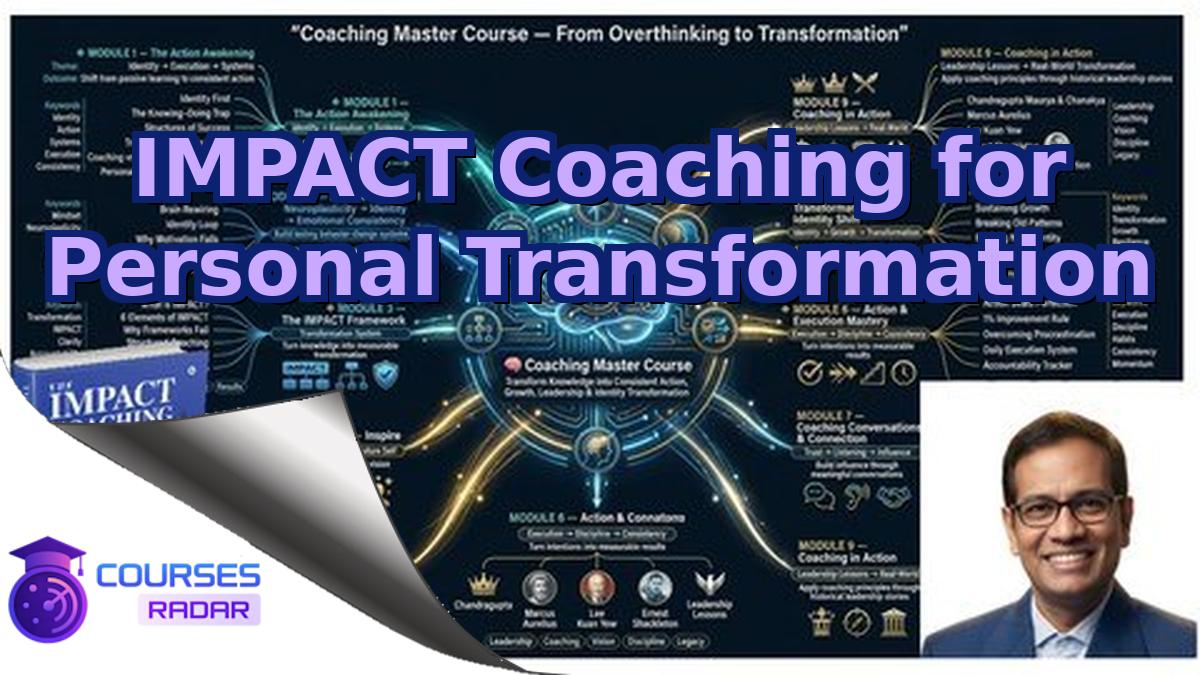
this course is aimed at learners who want to work through the basics of the course without getting lost in advanced material too early. The lessons focus on the most important building blocks of and show how they interact, so you gain a clear overview instead of isolated facts. The explanations use straightforward language and avoid unnecessary jargon.
This makes a beginner-friendly online workshop a good choice if you appreciate a gentle introduction that still keeps an eye on practical application and real-world use cases.
Overview
this training begins with a calm explanation of the core ideas behind the program. This section highlights the terms, structures, and patterns that appear repeatedly in . By discussing each element in a simple and accessible way, the course avoids overwhelming you with detail in the early stages.
These first steps create a solid starting point, helping you to recognise the familiar elements as you progress through more advanced lessons. It is a gentle introduction designed to give you orientation and confidence.
Who Is This Course For?
This course is intended for learners who appreciate patient explanations and realistic expectations. This course does not assume that you are already familiar with the course; instead, it guides you from the beginning and explains why each idea matters before moving on.
It is particularly suitable for people balancing study with work or family commitments. Because the lessons are divided into manageable units, you can make progress even if you only have short periods of time available on most days.
What You Will Learn
The course guides you step by step through the foundations of this training, using examples that reflect common scenarios in . You will learn why these techniques matter, how they work, and how to apply them effectively. Each explanation focuses on clarity, helping you understand the purpose behind every idea instead of just memorizing steps.
By completing the course, you will have a solid grasp of the principles that support the program. You will be able to approach tasks calmly and methodically, knowing how each concept fits into a complete workflow.
Requirements
This training is suitable for learners at all levels, including those who are new to . You do not need specialized background knowledge to get started, as the course introduces each concept of this course gradually and clearly. The explanations are designed to make the material approachable and practical.
You will need access to the internet and a device capable of running standard web applications. Any additional tools mentioned in the lessons will be simple to use and introduced with clear guidance.
Learning Format and Course Structure
The material is arranged in short, focused lessons that guide you step by step through the ideas behind the course. Each explanation is paired with an example connected to , helping you understand how the concept works in real practice.
The overall structure of this training gives you complete freedom in how you move through the content. You can revisit older lessons, slow down, or speed up based on your comfort level.
Benefits of Taking This Course
This training helps you understand the program in a way that feels concrete and manageable. Instead of focusing on isolated details, the course shows you how the different elements relate to one another inside . This wider view makes it easier to see how your new knowledge fits into real projects.
After finishing this course, you will be more comfortable working with the subject in a structured way. You gain both practical skills and a clearer mental model of how the tools and concepts behave.
Frequently Asked Questions
1. Is any background in required?
No specific background is required. The course explains the necessary context as it introduces the course, making it suitable even for newcomers.
2. How structured is the learning path?
The material is presented in a clear sequence, starting with basic ideas and moving toward more detailed applications. This helps you stay oriented from the first lesson to the last.
3. Can I use what I learn directly in my own projects?
Yes, many examples are chosen so you can adapt them to your own tasks and projects once you understand the underlying concepts.
Summary
Throughout this training, you work with the core principles of the program in a logical sequence. The course avoids unnecessary complications and instead focuses on what actually helps you understand and use the material. The connection to keeps the examples specific and meaningful.
The outcome is a practical foundation that supports both current goals and later expansion. You can use what you have learned as a stable base for deeper specialisation or broader exploration.
To see whether this course matches your learning needs in the course, simply visit our website. The course page outlines the topics, the teaching style, and the way you can follow the material at your own pace.