
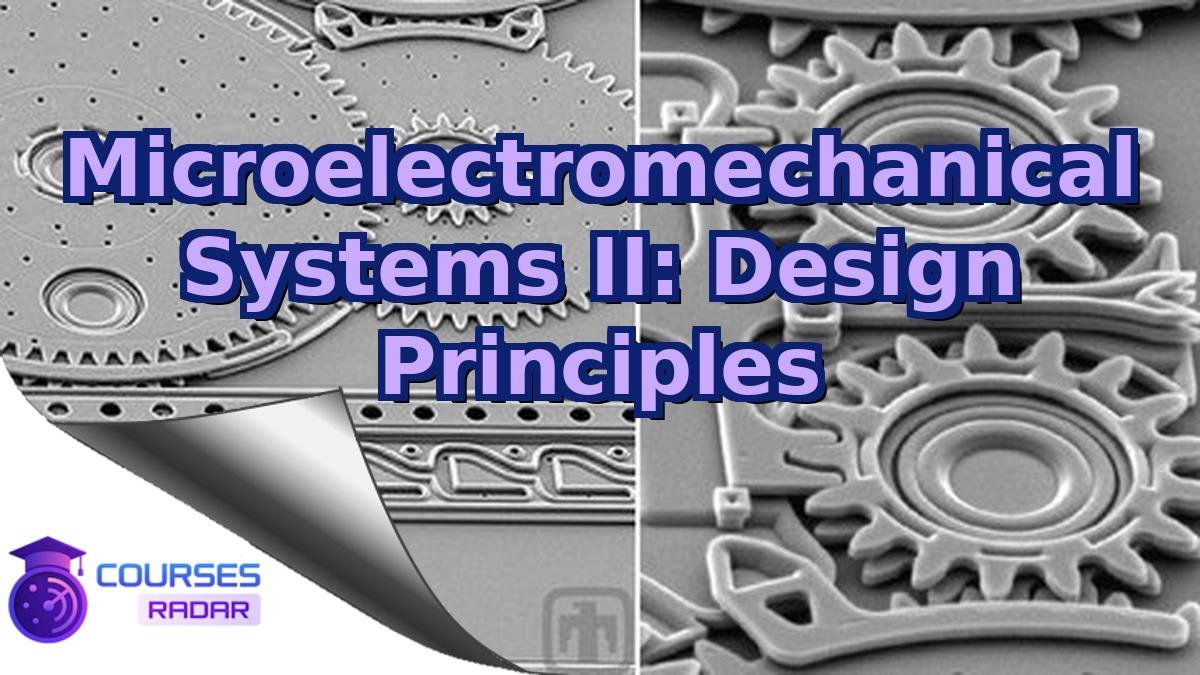
this course has been created for people who want to understand Microelectromechanical Systems II in an organised and predictable way. The course begins with the essential terminology of and gradually moves toward more detailed skills, explaining each step in plain language. You are encouraged to pause, revisit earlier lessons, and build your knowledge layer by layer.
Because a structured video-based program keeps the individual units compact, you can easily fit your learning around work, study, or other responsibilities.
Overview
the course begins with a calm explanation of the core ideas behind Microelectromechanical Systems II. This section highlights the terms, structures, and patterns that appear repeatedly in . By discussing each element in a simple and accessible way, the course avoids overwhelming you with detail in the early stages.
These first steps create a solid starting point, helping you to recognise the familiar elements as you progress through more advanced lessons. It is a gentle introduction designed to give you orientation and confidence.
Who Is This Course For?
this training is a good choice for anyone who wants to gain a solid overview of Microelectromechanical Systems II without rushing into advanced details too quickly. If you like the idea of building understanding gradually and having time to revisit important steps, this course is likely to fit your learning style.
People who benefit most include new learners, career changers who are exploring a new field, and experienced practitioners who want to refresh and systematise their existing knowledge. The lessons are designed to be clear and inclusive, not exclusive or intimidating.
What You Will Learn
This course explains the essential techniques behind Microelectromechanical Systems II through clear examples taken from common scenarios in . You will understand how individual concepts function and how they fit into a broader workflow. The gradual structure ensures that each lesson feels straightforward and manageable.
By the end, you will feel confident working with the core ideas of the program. You will have the knowledge to handle simple tasks as well as more complex challenges using the same foundation.
Requirements
This course keeps the entry requirements minimal so that learners can begin without needing a technical background. Whether you are new to or expanding your existing skills, the content introduces each aspect of Microelectromechanical Systems II in a clear and structured way.
All you need is a working computer or laptop and consistent internet connectivity. Any additional components will be introduced at the appropriate stage of the course.
Learning Format and Course Structure
The lessons are structured around clear explanations and practical examples. Each topic linked to Microelectromechanical Systems II is introduced gradually, helping you understand how the ideas appear in real applications within . The calm pacing makes it easy to stay oriented from the beginning to the end.
Since the course is flexible, you can decide how quickly you move through this course. You can repeat any lesson or pause whenever needed, ensuring a smooth learning experience.
Benefits of Taking This Course
This training helps you understand Microelectromechanical Systems II in a way that feels concrete and manageable. Instead of focusing on isolated details, the course shows you how the different elements relate to one another inside . This wider view makes it easier to see how your new knowledge fits into real projects.
After finishing the course, you will be more comfortable working with the subject in a structured way. You gain both practical skills and a clearer mental model of how the tools and concepts behave.
Frequently Asked Questions
1. What kind of learner is this course designed for?
The course is suitable for learners who appreciate a calm, structured approach to Microelectromechanical Systems II, whether they are new to or looking to refresh their understanding.
2. Do I need to complete the course in one go?
No, you can take breaks and return whenever you wish. Progress is saved by the platform, so you can continue where you left off.
3. Is there a recommended way to follow the lessons?
Many learners find it helpful to watch a lesson, try the examples, and then revisit key parts. The structure of this training allows you to do exactly that.
Summary
the program offers a clear and structured way to approach Microelectromechanical Systems II. Instead of piecing together information from many different sources, you follow a single path that explains the core ideas and shows how they are used in practice. This steady progression makes the subject easier to understand and more comfortable to apply.
By the end of the course, you will have a solid foundation that you can use in a variety of contexts within . You keep the flexibility to continue learning at your own pace, using the methods and perspectives gained here as a reliable starting point for future steps.
If you would like to move from a general interest in Microelectromechanical Systems II to a more solid understanding, you can explore this course further on our website. The course description outlines what you will cover and how the lessons are organised.